30 March 2026 - Approx. 6 min read
Last week I was in the pub having a few drinks with a friend, and in the middle of a particularly heavy part of the conversation he mentioned how it's common knowledge that sugar feeds cancer. This statement is a common alt-med claim that comes along with the idea that if you have cancer you can treat it by reducing your sugar intake, starving the cancer cells of energy.
31 March 2025 - Approx. 3 min read
On March 21st my Facebook feed brought up the following dire warning:
11 November 2024 - Approx. 7 min read
I went to the Go Green Expo in Wellington on the 2nd of November, along with Mark, Bronwyn and my two tiny sidekicks. Mia had a great time having her own little disco on the power company's display, and they both enjoyed all the free samples. However I had to steer them clear of the booze, and there was a surprising amount of that. That and mushrooms. I think I must have missed a memo somewhere – when did mushrooms become a thing?
22 July 2024 - Approx. 4 min read
In February it was announced by researchers that non-verified cell lines and misidentified nucleotide sequences were cited in hundreds of papers. This got picked up by the media in May:
21 August 2023 - Approx. 15 min read
Back in November last year, I wrote a critique of a Safe ICT questionnaire I picked up at the Go Green expo. We recently received a copy of Safe ICT's most recent newsletter where they responded to my criticisms. I'm not going to rebut their rebuttal, as this kind of to and fro rarely ends up being productive, but suffice it to say that Safe ICT's overly cautious advice for people using technology is not in alignment with our understanding of the science, and is not based on any scientific evidence of harm.
9 January 2023 - Approx. 3 min read
It was a relatively well known practice in WW2 (and possibly before) that if your torch/flashlight battery was getting a little flat, a few quick touches to a vehicle battery would restore a fair bit of charge. This information became more public knowledge in the UK, post WW2 when times were tough, and a number of articles were published on it. I cannot now find any, but the earliest article I have read was a 1953 one in "Wireless World" by R W Hallows with some designs and an analysis of these simple methods.
3 May 2021 - Approx. 1 min read
Normally I would be excited to hear that a prominent biologist is in New Zealand, but in this case the biologist in question is Dr Bruce Lipton - a figure who is well known to skeptics.
1 August 2018 - Approx. 4 min read
I've written about MMS - the "Miracle Mineral Supplement" - several times beforeA (here *and here*, for example). I guess it's a useful thing to hold up to show how something can clearly be woo - eg claims that it kills/cures practically everythingB under the sun - and yet people still buy the stuff. Buy it, and potentially do real harm using it. Because MMS is essentially bleach: 28% sodium chlorite in distilled water. Those using it typically 'activate' it by mixing it with lemon or orange juice, which gives the strong bleach, chlorine dioxide. And then they drink it, or - even worse - feed it to their children...
6 August 2017 - Approx. 1 min read
Lori Harris from the UK has sold all her belongings to pay for treatment for her mother, Lisa, who has stage 4 ovarian cancer. The Go Fund Me page for the fundraising effort for this treatment, which asks for £200,000, talks of needing money for immunotherapy in Germany, and links to a great article describing how this new therapy has the potential to allow us to treat some cancers in a novel way.
1 May 2015 - Approx. 2 min read
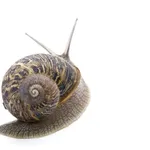
Sunday 26 April's Life/Style section in the NZ Herald (see Newsfront p6) brings us the latest 'beauty trend' to hit our shores: the snail facial.
1 November 2010 - Approx. 3 min read
Alison Campbell finds some claims about raw foods hard to swallow.
1 November 2007 - Approx. 2 min read
The Plausibility of Life-resolving Darwin's dilemma, by Marc Kirschner and John Gerhart. Yale University Press, 2005. ISBN 0-300-10865-6. Reviewed by Louette McInnes.
1 May 2005 - Approx. 6 min read
Now that Terri Schiavo has been allowed to die peacefully there is an opportunity to reflect on the matter free from the hysteria and religious arguments advanced as an excuse to maintain her in a vegetative state. When discussing the ethics of the situation with a local surgeon he commented that the main problem was that the feeding tube should never have been inserted in the first place. A feeding tube is surgically inserted into the stomach through a hole in the abdominal wall. Once such medical interventions have been made it is very hard to reverse them. In this case the debate appears to have been hijacked by Catholic pressure groups.