Do Cats React to Egyptian Music?
Mark Honeychurch - 9th November 2026
I’m a big fan of the Assassin’s Creed series of games, where you play an assassin in a virtual reality simulation of history. For me I think a large part of the attraction is a mix of how well the parkour parts of the game flow when you’re in towns and cities, along with the completionist inside me that loves to 100% complete games that have a large task list of missions and collectables.

In the game, the virtual reality simulations are built from your ancestors’ memories, which have been stored in genetic code and passed down from generation to generation. Of course, this idea is not scientific, but in the context of a computer game I’m willing to give this little bit of pseudoscience a pass.
I guess this is an instance of the One Big Lie that sci-fi and fantasy movies often adhere to - where they introduce one idea that doesn’t follow established science, but stick to just the one change, so as not to leave the audience worrying that at any time a new physics-defying idea could be introduced. Presumably it’s relatively easy to digest one change to what we know about the world, like faster than light travel or dragons being real, and consider the implications of that mechanic on the plot as you’re watching the movie. But if new reality-defying ideas keep being introduced throughout the movie, you end up not being able to predict where the plot might be going - and I think that’s part of the fun of a good movie, trying to guess what might happen next. When the rules are constantly changing, all bets are off.
Anyway, that little aside about Assassin’s Creed and its One Big Lie is somewhat relevant to this article. I even chose a screenshot of the game from Assassin’s Creed Origins, one of the more recent titles in the game series that is based in Egypt, because this article is about genetic memory, Egypt and cats.
It’s TikTok nonsense time again. This time, my daughter’s given me a story about how cats retain the genetic memory of their ancestors’ time in Egypt, where they were revered. Apparently playing “Egyptian” will awaken this memory, causing the cats to revert to their ancestral form in some way, and act like they are Gods among men.
Genetic Memory
Obviously the genetic memory idea is fully pseudoscience. The closest I can think of in real science is epigenetics; there are some interesting instances where epigenetic factors can allow a mother to have an effect on gene expression in its offspring, which in some way could be considered a kind of passing on of a memory. For example, the water flea Daphnia’s shell grows thicker and harder if the mother’s body releases biochemical signals during gestation of the offspring. Those signals are only present if the mother is in a high-risk environment, and this effect has been replicated in the lab by exposing pregnant water fleas to chemicals released by predator fish. But examples of epigenetic effects being passed from parent to child are all very limited, and most definitely don’t allow for any kind of transmission of complex memories.
You could also maybe argue that evolution is a kind of genetic memory. Cats today carry in their genes the result of the artificial selective pressures placed on them during domestication, and so those selected genes are, in some form, a record of the past and of their interactions with humans. But, again, this is a long way from the kind of specific genetic memory that this idea of cats reacting to Egyptian music requires.
The Evidence
As evidence of this phenomenon, there are a lot of videos on TikTok where people play a piece of Egyptian music near their cats, and the cat then reacts - sometimes freezing, or maybe sitting upright, pricking their ears up, opening their eyes wide, or lifting their head:
I can’t help but think that, in the example videos above, the cats are just reacting to a loud noise nearby. Presumably anyone who tries this at home and gets a negative result is unlikely to bother to post the video online, but people whose cats react in interesting ways are much more likely to post their own video. And this selection bias means that pretty much all you’ll find about this supposed phenomenon online are videos where cats react, even though there’s a good chance this isn’t representative of the average lazy housecat. Who knows whether these same cats who reacted to the Egyptian music would be likely to react to any music, or indeed to any loud sound played at them.
Wouldn’t it be nice if we could test this out?
Science Time
As luck would have it, there are two cats in my house. I don’t want to say that I own two cats, because I’m not sure that would be accurate - at the very least they don’t act like they’re owned. I don’t like cats, and neither does my wife, but it turns out that children tend to love them, and so there’s a white Ragdoll and a grumpy looking Persian that co-habit with us. It turns out that this is perfect for a totally non-scientific science experiment. Sample size of two, check. No rigour, check. No blinding, check. No repetition, check. But I guess I did at least try out a couple of controls, so my experiment has that going for it.
My experiment first involved playing this piece of Egyptian music loudly near my cats:
I first tried it with the Persian, Raine, while she was lying on the sunroom floor. She didn’t even move. Then I tried the same with Luna, the Ragdoll, who was lying on my bed. Again, no response, even though the music was really loud. Maybe my cats are deaf?
I asked my daughter to help with the experiment, so the next day she played a slightly different piece of Egyptian music at the cats - and she was also good enough to take pictures of them ignoring her. Luna just walked away, while Raine carried on licking herself, as cats are wont to do.
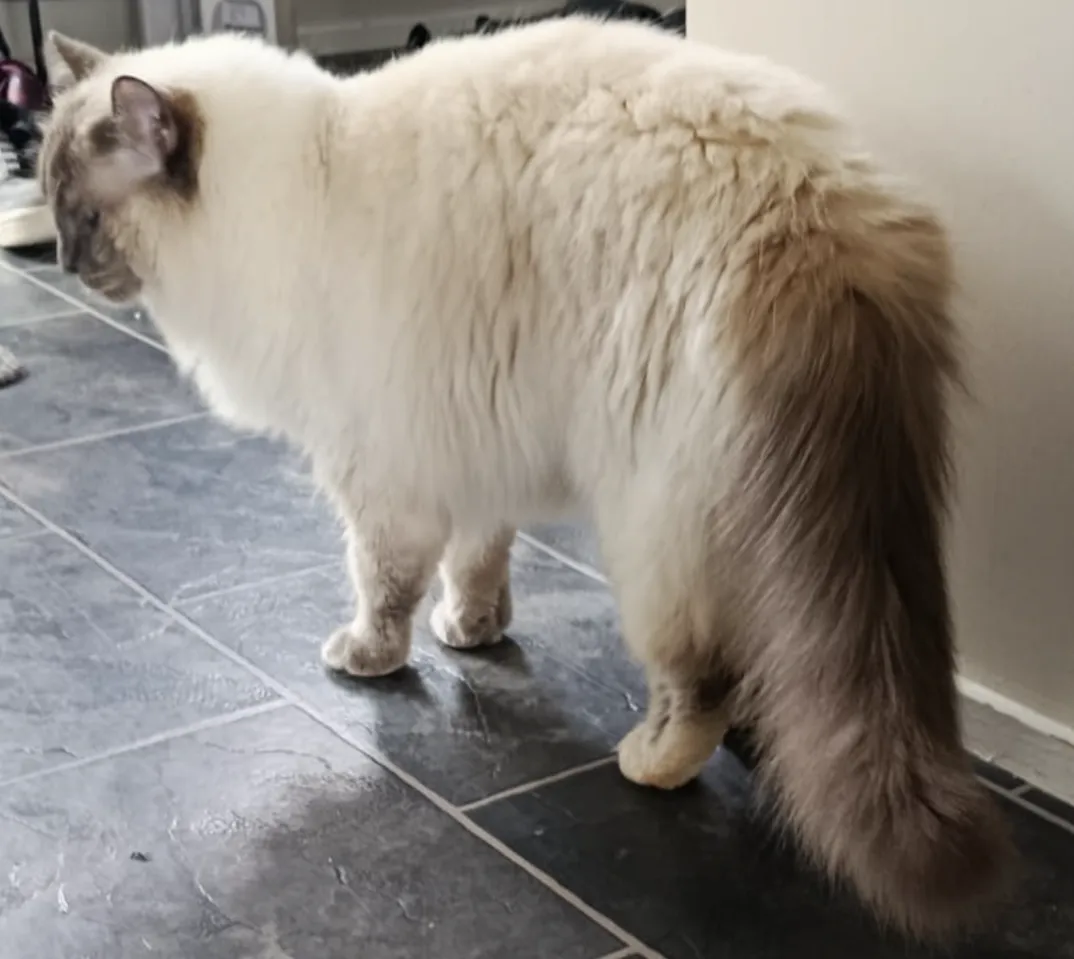
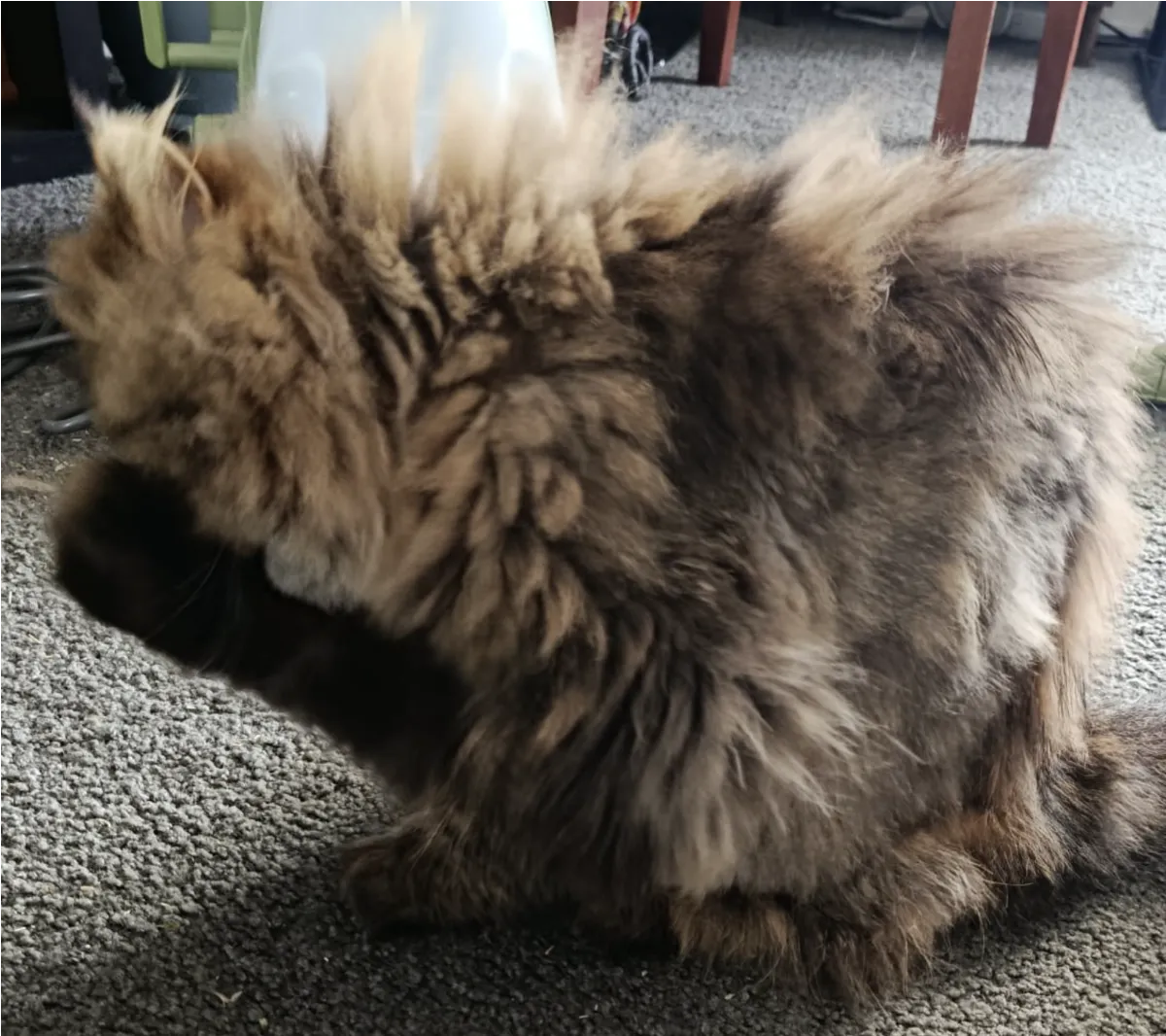
For my control, I tried a couple of tracks. First up was the song “I Can’t Play Piano, Pt. 1”, from Jon Benjamin’s album “well, i should have (learned how to play piano)”. The album is an interesting listen, with a professional jazz band accompanying Jon’s attempts to sound like he knows what he’s doing on the piano.
I tried this track on both cats, and again neither of them batted an eyelid, pricked up an ear or moved their head. It might not have helped that Raine had found a pile of catnip my daughter had left for her, and was focused on burying her face in it.
Then, getting desperate, I tried track 1 from Merzbow’s 1995 album Noizhead, which, like the other four tracks on the album, doesn’t have a title. Merzbow is a Japanese artist, one of my favourite musicians, and he makes music in a genre called Japanoise. My family describe his music as “annoying”, “noise”, “unlistenable” and other choice words. I will admit that a casual listen just sounds like static, broken machinery, etc, but there’s definitely some structure in there, and I find it interesting to listen to the different textures of noise, as well as the subtle rhythm:
Now, this track is where I actually saw something happen. Luna turned round at the sound of this “music” and glared at me before walking off. And Raine took her head out of the catnip long enough to find the source of the noise, my phone in my hand, before returning to her vice.
What sounds do cats actually like?
My daughter pointed out that there’s “music” for cats on YouTube which is likely to pique their interest. Here’s a video titled “Calming Music for Cats”:
That video gets an instant reaction from Raine, the Persian cat, whenever I play it. Even if she’s asleep she’ll wake up and lift her head. But this behaviour is not overly surprising, as the video’s basically just bird sounds - it seems obvious that it would get the attention of a cat that likes to try to kill birds (although thankfully she’s too useless to ever catch one).
Is this idea historic?
In ancient Egypt cats were connected to the goddess Bastet - the goddess of home, fertility, and protection. They weren’t pampered, they were used to help protect people’s homes and grain stores from mice, rats, scorpions, snakes, etc. As time went on, cats became more revered in Egypt, with punishments for harming or killing a cat.
Eventually the mummification of cats as an offering to the Gods became a big thing, with cats being bred specifically for this purpose. Catacombs (no pun intended) have been found in Egypt with mummified cats stuffed into holes in the rock, and in the cat god city of Bubastis there’s an underground complex containing hundreds of thousands of mummified cats. Although in one way I guess this is a sign that cats were seen as “sacred”, I’m pretty sure that any cat being bred for the express purpose of being mummified and sold to someone at a temple wouldn’t think of themselves as being revered.
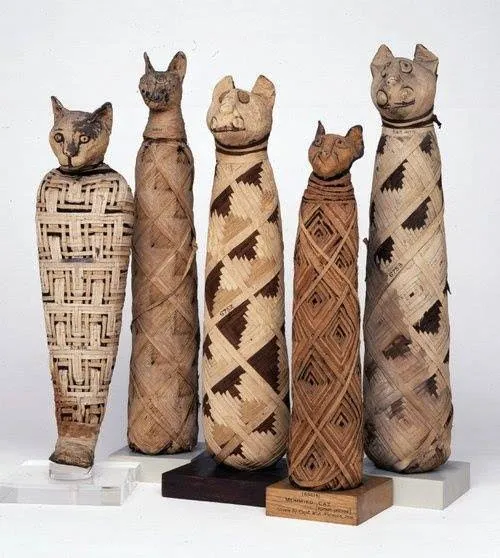
The fact that cats lived in homes with humans does at least lend itself to the idea that cats in ancient Egypt would have heard music, and the many cats at the Tell Basta temple in Bubastis would have heard music when daily rituals occurred and during festivals.
Conclusion
The idea of thousands of years of genetic memory has no basis in fact, and the cat videos online are unlikely to be a representative sample of how cats react to Egyptian music - the evidence is shoddy, and the plausibility is very, very low. My own “experiment” with cats was a total bust, and given my dislike of cats I’m starting to wonder why I’ve spent so much time writing an article about them.